
BMI calculator
BMI compares your weight to your height. It is a rough population-level screening figure — useful for orientation, poor at describing any individual — so this page shows the number, the healthy range for your height, and a straight account of its limits.
Your results
Results update as you change the numbers.
BMI
24.7
Healthy weight
Healthy weight range for your height: 59.9 kg–80.7 kg.
This page runs the same equations as the CalEasy app, so the plan you see here is the plan you get in the app. Nothing you enter is sent to a server — the maths runs in your browser.
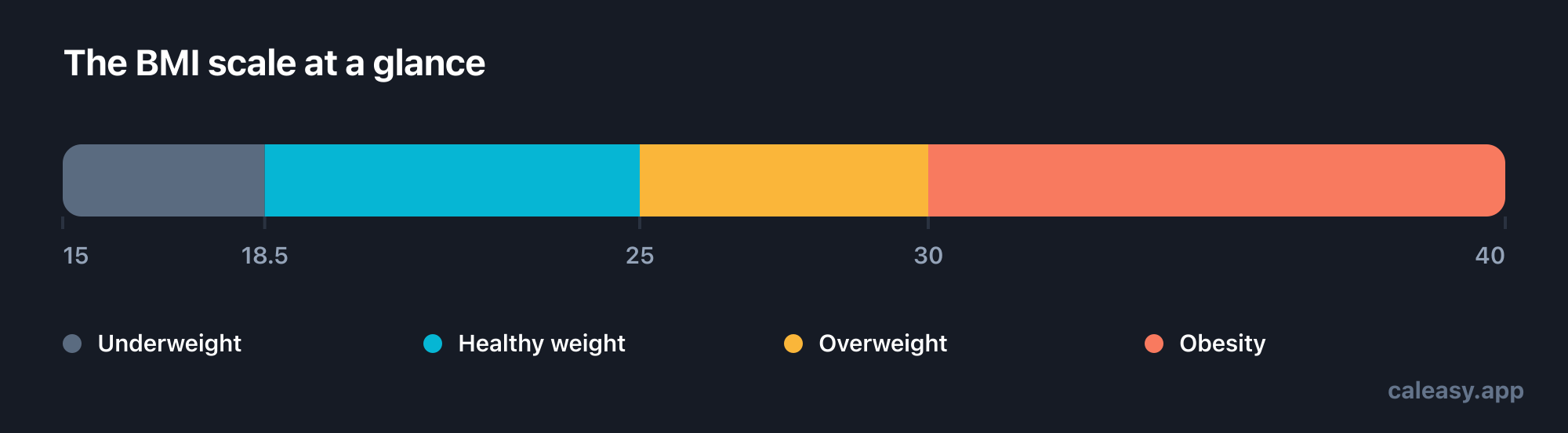
What the categories mean
- Underweight
- < 18.5
- Healthy weight
- 18.5 – 24.9
- Overweight
- 25.0 – 29.9
- Obesity
- ≥ 30.0
These are the World Health Organization cut-offs for adults. They are statistical bands, not a diagnosis, and they do not apply to children, teenagers, or pregnancy.
How BMI is calculated
BMI is your weight in kilograms divided by the square of your height in metres. A 70 kg adult at 175 cm has a BMI of 22.9. The adult bands are: under 18.5 underweight, 18.5 to 24.9 healthy weight, 25 to 29.9 overweight, and 30 or above obesity.
The healthy weight range shown above is simply those cut-offs worked backwards for your height — the weights that correspond to a BMI between 18.5 and 24.9.
What BMI does not tell you
BMI cannot distinguish muscle from fat. A well-trained athlete is routinely classed as overweight while carrying very little body fat, and someone with low muscle mass can sit in the healthy band while carrying more fat than is ideal. It also says nothing about where fat is stored, and fat around the abdomen carries more health risk than the same amount elsewhere.
It was designed to describe populations, not people. Average build differs between ethnic groups — the thresholds at which health risk rises are lower for people of South and East Asian descent, for instance — and the standard adult bands do not apply to children, pregnancy, or older adults, where a slightly higher BMI is often protective.
Treat a BMI outside the healthy range as a prompt for a conversation with a doctor, not a conclusion. Waist measurement, blood markers, fitness, and how your weight has changed over time all say more about health than this one ratio does.
A more useful next question
If you want to change your weight, the practical question is not what your BMI is but what you burn and what you eat. The TDEE calculator estimates your maintenance calories, and the calorie deficit calculator turns a target weight and a pace into a daily number and a realistic timeline.
Body weight also moves for reasons that have nothing to do with fat — water, salt, glycogen, and digestion swing the scale by a kilogram or more from morning to morning. Weekly averages tell you far more than any single reading.
Frequently asked questions
What is a healthy BMI?
For adults, 18.5 to 24.9 is the range the WHO classes as healthy weight. It is a screening band rather than an individual target — plenty of healthy people sit just outside it, particularly those carrying more muscle than average.
Is BMI accurate for athletes?
Often not. Muscle is denser than fat, so athletes are frequently classed as overweight or obese by BMI despite low body fat. If you train seriously with weights, body-fat measurements and how your clothes fit are more informative.
Does BMI work the same for men and women?
The formula and adult cut-offs are the same, even though women naturally carry a higher proportion of body fat at the same BMI. That is one of the reasons BMI is a poor individual measure of body composition.
What should I do if my BMI is outside the healthy range?
Use it as a starting point for a conversation with a doctor, who can look at waist circumference, blood pressure, blood glucose, and your history alongside it. If weight change is the goal, work out your maintenance calories first and pick a pace you can sustain.
Can I use BMI for my child?
Not with these bands. Children and teenagers are assessed against age- and sex-specific percentile charts instead, because body composition changes throughout growth. Ask a paediatrician or your national health service.
Estimates, not medical advice
These calculators use published equations to estimate your energy needs. They are informational only — not a diagnosis, treatment, or a substitute for professional advice. Individual needs vary with body composition, medication, and health conditions. Talk to a doctor or registered dietitian before making significant changes, especially if you are pregnant or breastfeeding, under 18, or managing a medical condition or eating disorder.
See the science and sources behind our numbers →Other calculators
Keep reading
And this is where you hit it
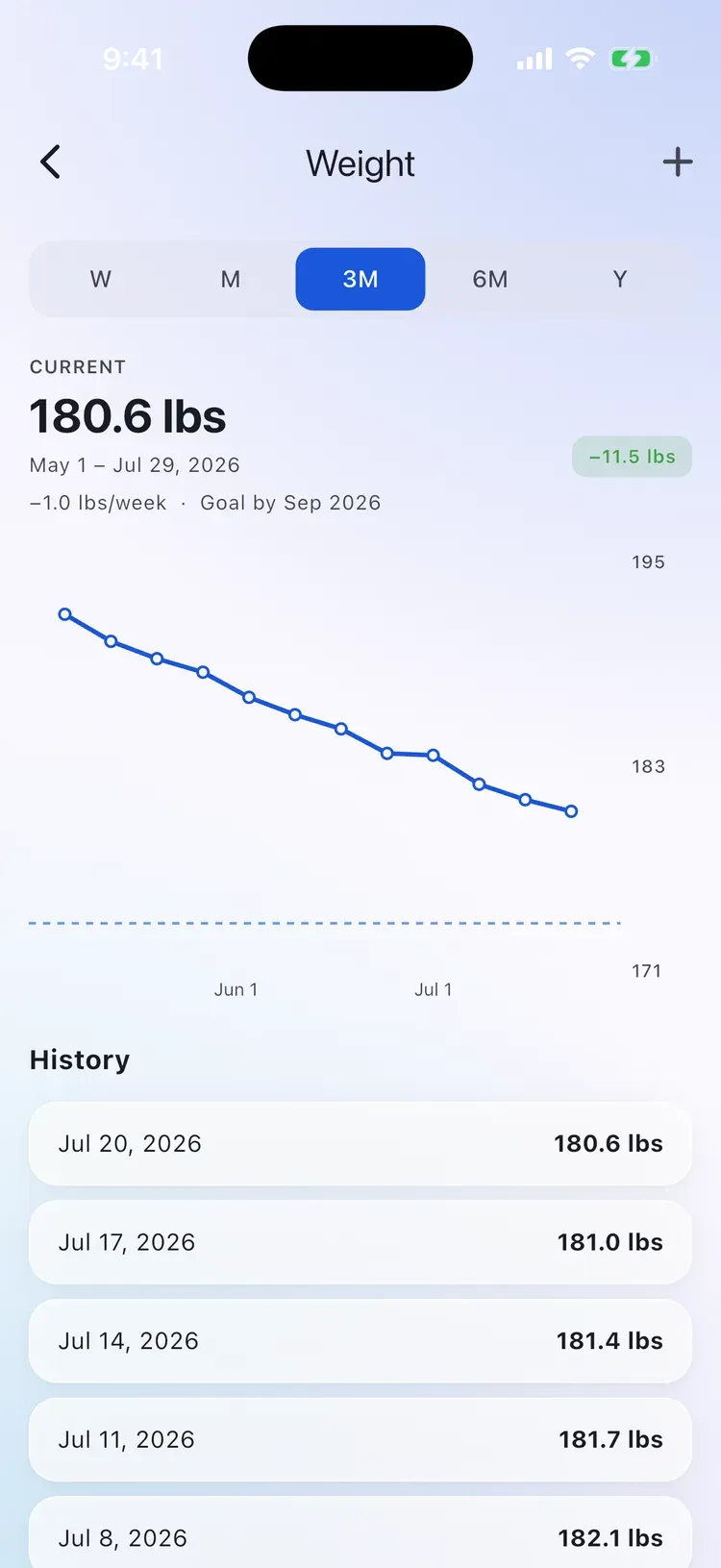
A number is easy. Hitting it every day is the hard part.
CalEasy turns your target into a daily habit: snap a photo of your meal, say what you ate, or type it — the AI does the counting. Your target, macros, and progress stay in one place.
Get CalEasyFree trial. Cancel anytime.