
Protein calculator
Protein is the macro with the clearest evidence behind it: it protects muscle while you lose fat and keeps you fuller than carbohydrate or fat at the same calories. This calculator sets a daily target from your body weight and goal, within the calories you actually have to spend.
Your results
Results update as you change the numbers.
Protein
176 g
2.2 g per kg of body weight
Daily target
1,898
kcal / day
Protein
37% of calories
This page runs the same equations as the CalEasy app, so the plan you see here is the plan you get in the app. Nothing you enter is sent to a server — the maths runs in your browser.
How much protein you need
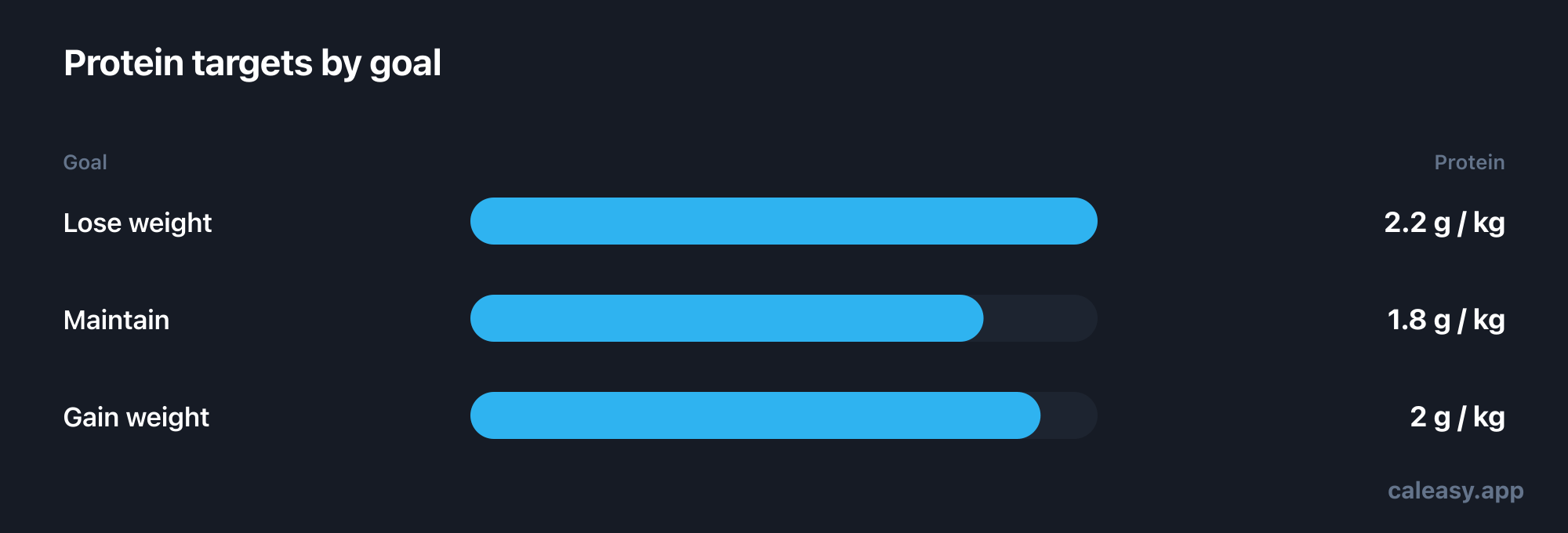
For an adult who trains and wants to keep muscle, the evidence-backed range is roughly 1.6–2.2 g per kilogram of body weight a day. This calculator uses 2.2 g/kg while losing weight — the top of that range, because a calorie deficit is exactly when lean mass is at risk — 1.8 g/kg at maintenance, and 2.0 g/kg when gaining.
Those figures are far above the 0.8 g/kg that dietary guidelines set as a minimum, and the difference confuses people. The guideline number is the amount needed to prevent deficiency in a sedentary adult; it is a floor for avoiding harm, not the amount that best supports training, satiety, or body composition.
If you are sedentary and not trying to change your weight, you need less than this calculator suggests. If you are dieting, training hard, or over about 60, the higher end earns its place.
Why the target is not simply weight × ratio
Two adjustments separate this calculator from the usual multiplication, and both matter for real bodies.
Above a BMI of 25, protein is calculated from an adjusted body weight rather than your full weight: the weight at a BMI of 25, plus 40% of the excess. This is the standard clinical convention for prescribing protein in obesity, and the reasoning is simple — lean mass does not rise one-for-one with body fat, so a flat gram-per-kilogram figure over-prescribes protein for higher-BMI profiles without any added benefit.
The target is also capped so that at least 20% of your calories can still come from fat. Because protein is prescribed per kilogram of body weight and fat is prescribed as a share of calories, a low-calorie plan for a heavier person can otherwise leave almost nothing for dietary fat — which carries essential fatty acids and fat-soluble vitamins. When the cap engages, the calculator says so rather than quietly returning an impossible number.
Spreading it across the day
Total daily protein does most of the work, but distribution helps at the margin. Roughly 25–40 g at each of three or four meals is easier to absorb into a routine than one enormous serving, and it keeps you fuller across the day rather than for one hour after dinner.
The practical obstacle is almost always breakfast, which in most eating cultures is the lowest-protein meal by a wide margin. Fixing that one meal often closes most of the gap between where people are and where they want to be.
What the target looks like in food
Roughly speaking, 100 g of cooked chicken breast is about 30 g of protein; a 150 g pot of Greek yoghurt around 15 g; three eggs about 19 g; 100 g of lentils once cooked about 9 g; a scoop of whey powder 20–25 g. Hitting 150 g a day is three solid protein-centred meals plus a snack, not an exotic diet.
Plant-based eating makes the target harder but not unreachable: lean on legumes, tofu, tempeh, seitan, and dairy or a supplement if you use them, and expect to eat more total food for the same protein, since plant sources carry more carbohydrate alongside.
Is more always better?
Past roughly 2.2 g/kg the additional benefit for muscle retention flattens out, and the calories have to come from somewhere — usually at the expense of carbohydrate, which fuels training, or fat, which you need. Very high intakes are not dangerous for healthy people, but they are not free either.
The one real caution is kidney disease. In healthy kidneys, high protein intake has not been shown to cause damage; if you have reduced kidney function, protein intake is genuinely a medical decision and belongs with your doctor rather than with a calculator.
Frequently asked questions
How much protein do I need a day?
For an active adult, roughly 1.6–2.2 g per kilogram of body weight — this calculator uses 2.2 g/kg while losing weight, 1.8 g/kg at maintenance, and 2.0 g/kg when gaining. Sedentary adults need less; the guideline minimum of 0.8 g/kg is a floor for avoiding deficiency, not a performance target.
Should protein be based on my body weight or my goal weight?
On your current weight for most people. Above a BMI of 25 this calculator uses an adjusted body weight instead — the weight at BMI 25 plus 40% of the excess — because lean mass does not scale one-for-one with body fat, and a flat ratio would over-prescribe protein.
Can I eat too much protein?
For healthy people, high intakes have not been shown to cause harm, but the benefit flattens beyond about 2.2 g/kg and those calories are then unavailable for carbohydrate or fat. If you have reduced kidney function, protein intake is a medical decision — talk to your doctor.
Do I need protein powder?
No. It is a convenient way to add 20–25 g without cooking, which is why it is popular, but food covers the target perfectly well. Powder solves a logistics problem, not a nutritional one.
Does protein timing matter?
Far less than the total. Spreading intake across three or four meals is slightly better than one large serving, and the practical win for most people is adding protein to breakfast — usually the lowest-protein meal of the day.
How do I hit a high protein target as a vegetarian or vegan?
Build meals around legumes, tofu, tempeh, and seitan, add dairy or eggs if you eat them, and consider a supplement to close the gap. Expect to eat more total food for the same protein, since plant sources bring carbohydrate along with them.
Estimates, not medical advice
These calculators use published equations to estimate your energy needs. They are informational only — not a diagnosis, treatment, or a substitute for professional advice. Individual needs vary with body composition, medication, and health conditions. Talk to a doctor or registered dietitian before making significant changes, especially if you are pregnant or breastfeeding, under 18, or managing a medical condition or eating disorder.
See the science and sources behind our numbers →Other calculators
Keep reading
And this is where you hit it
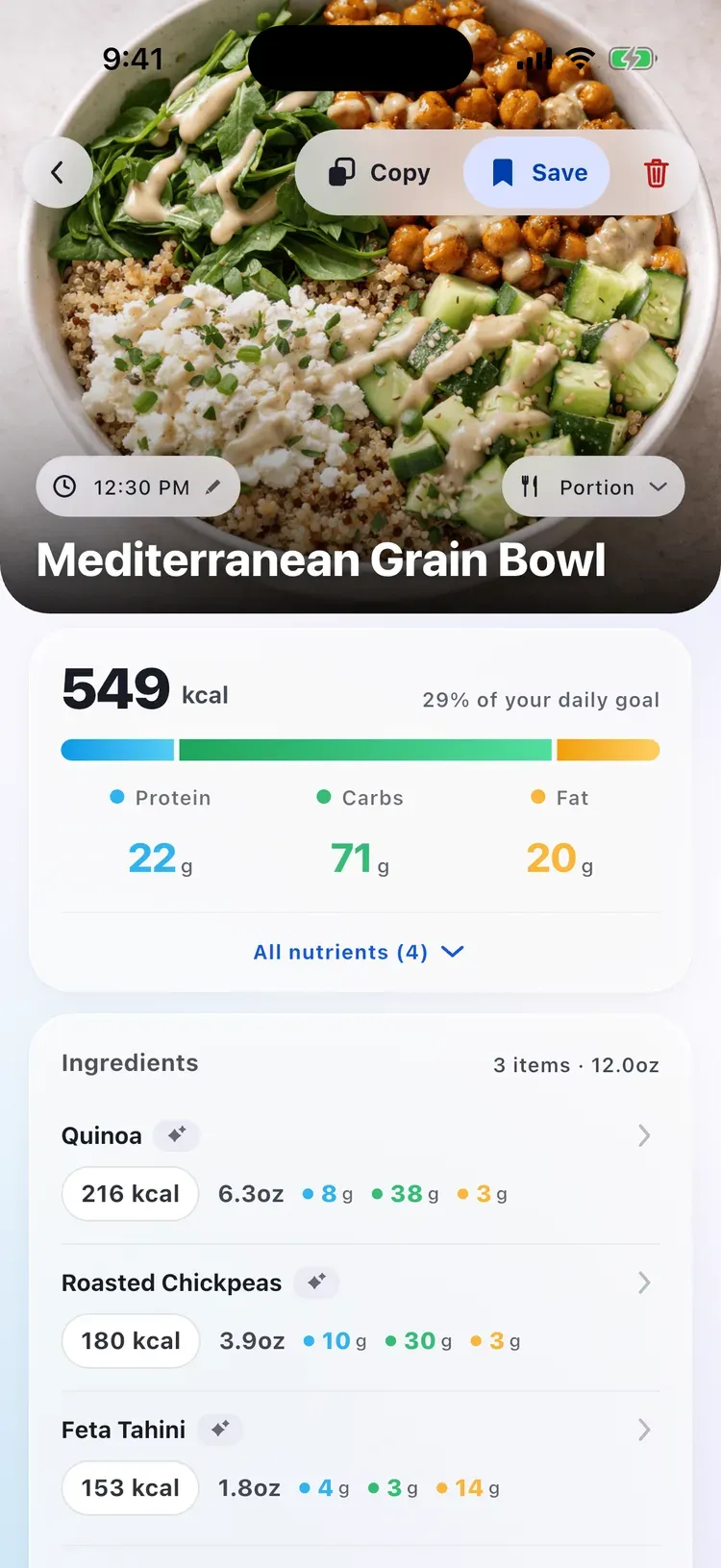
A number is easy. Hitting it every day is the hard part.
CalEasy turns your target into a daily habit: snap a photo of your meal, say what you ate, or type it — the AI does the counting. Your target, macros, and progress stay in one place.
Get CalEasyFree trial. Cancel anytime.