
Macro calculator
Calories decide whether you lose or gain weight; macros decide how much of that change is muscle versus fat, and how full you feel getting there. This calculator sets your protein, carbohydrate, and fat targets from your own calorie budget.
Your results
Results update as you change the numbers.
Daily target
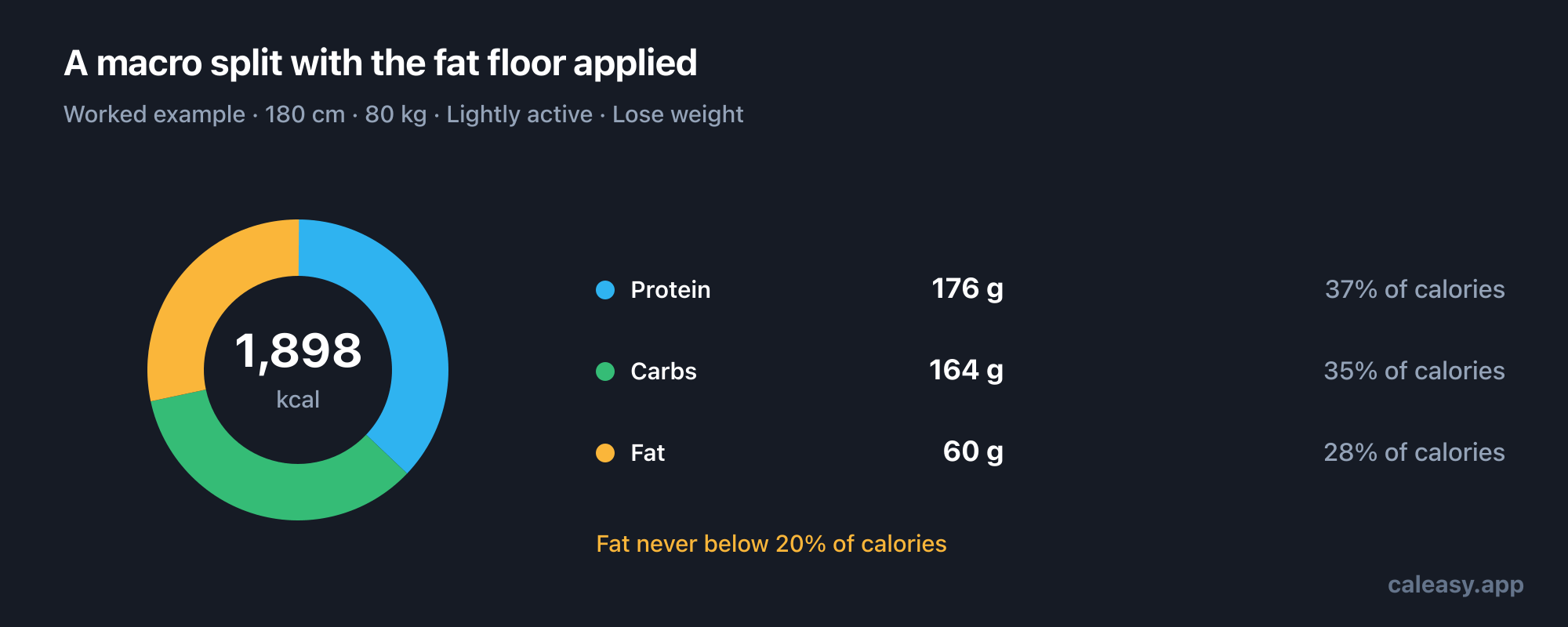
1,898
kcal / day
Protein
176 g
Carbs
164 g
Fat
60 g
This page runs the same equations as the CalEasy app, so the plan you see here is the plan you get in the app. Nothing you enter is sent to a server — the maths runs in your browser.
How the split is built
Protein comes first, set per kilogram of body weight: 2.2 g/kg when losing, 1.8 g/kg at maintenance, and 2.0 g/kg when gaining. Protein is the macro with the clearest evidence behind it — it protects lean mass in a deficit and is the most filling of the three, which is exactly what you want when calories are limited.
Fat and carbohydrate then split the calories that remain. The default sends 55% of the leftover to carbohydrate when losing and 50% at maintenance or in a surplus, with fat taking the rest. That places total fat near 30% of calories on a cut — comfortably inside the 20–35% range that dietary guidelines recommend.
Two guardrails most calculators skip
The first is a floor on fat at 20% of total calories. Because protein is prescribed per kilogram of body weight rather than as a share of calories, a heavier person on an aggressive deficit can end up with almost nothing left for fat once protein and carbs are allocated. Dietary fat is not optional — it carries essential fatty acids and fat-soluble vitamins and supports hormone production. When the split would push fat under the floor, calories shift back from carbohydrate, the flexible macro. Carbohydrate has no floor, so deliberately low-carb and keto-style splits still work.
The second applies above a BMI of 25, where protein is calculated from an adjusted body weight rather than your full weight: the weight at a BMI of 25 plus 40% of the excess. This is the standard clinical convention, and the reasoning is simple — lean mass does not increase one-for-one with body fat, so a flat gram-per-kilogram target over-prescribes protein for higher-BMI profiles and squeezes out the other macros for no benefit.
How closely do you need to hit these?
Protein is the one worth chasing — get within about 10 g of the target most days. Carbohydrate and fat are far more flexible: trading some fat for carbs on a training day, or the reverse on a rest day, makes little difference as long as calories and protein hold.
Nobody hits three targets exactly, and it is not required. Consistently landing close beats occasionally landing perfectly, and the people who succeed at this are the ones who kept logging, not the ones who hit 100% every day.
Frequently asked questions
How much protein do I actually need?
For an active adult trying to lose fat, roughly 1.6–2.2 g per kilogram of body weight per day covers the evidence-backed range, and this calculator uses the upper end while cutting to protect lean mass. Sedentary adults need less; the floor set by dietary guidelines is far lower, around 0.8 g/kg.
What is the best macro split for weight loss?
The one you can keep. Once protein is adequate and calories are in a deficit, the carb-to-fat ratio is mostly a matter of preference and satiety. Some people feel better on more carbs, others on more fat — the evidence does not favour either strongly for fat loss.
Can I use this for keto?
Yes. The calculator applies no floor to carbohydrate, so if you lower the carb share the split holds and fat takes the remainder. Keep an eye on the protein figure, which stays deliberately high to protect muscle.
Why is my fat target higher than I expected?
Because fat is protected at 20% of your calories. On a low-calorie, high-protein plan the raw split would push fat below that, so calories are moved back from carbohydrate to keep the floor intact.
Do macros matter more than calories?
No — calories decide the direction of weight change. Macros decide the composition of that change and how manageable it feels. Get calories right first, then use macros, especially protein, to improve the result.
Estimates, not medical advice
These calculators use published equations to estimate your energy needs. They are informational only — not a diagnosis, treatment, or a substitute for professional advice. Individual needs vary with body composition, medication, and health conditions. Talk to a doctor or registered dietitian before making significant changes, especially if you are pregnant or breastfeeding, under 18, or managing a medical condition or eating disorder.
See the science and sources behind our numbers →Other calculators
Keep reading
And this is where you hit it
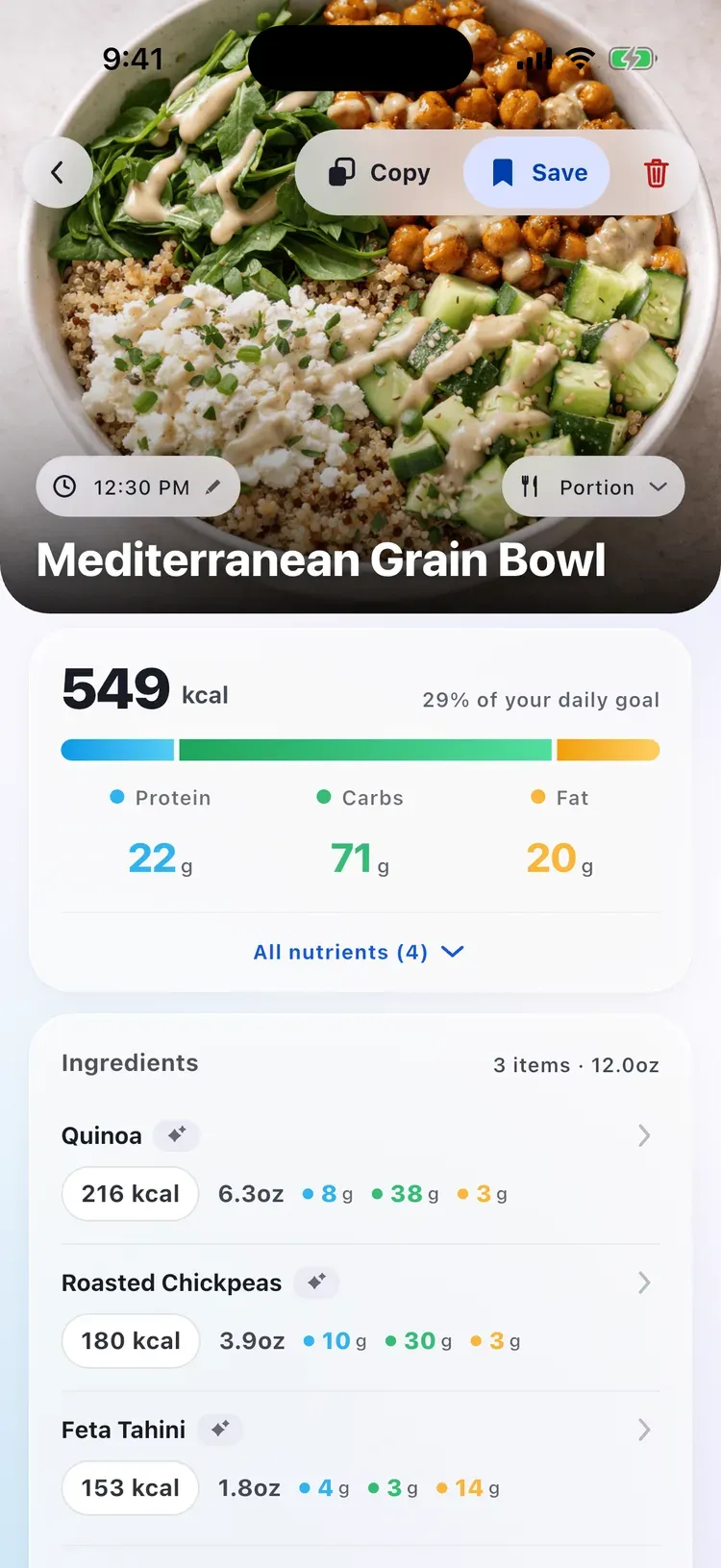
A number is easy. Hitting it every day is the hard part.
CalEasy turns your target into a daily habit: snap a photo of your meal, say what you ate, or type it — the AI does the counting. Your target, macros, and progress stay in one place.
Get CalEasyFree trial. Cancel anytime.